.png)
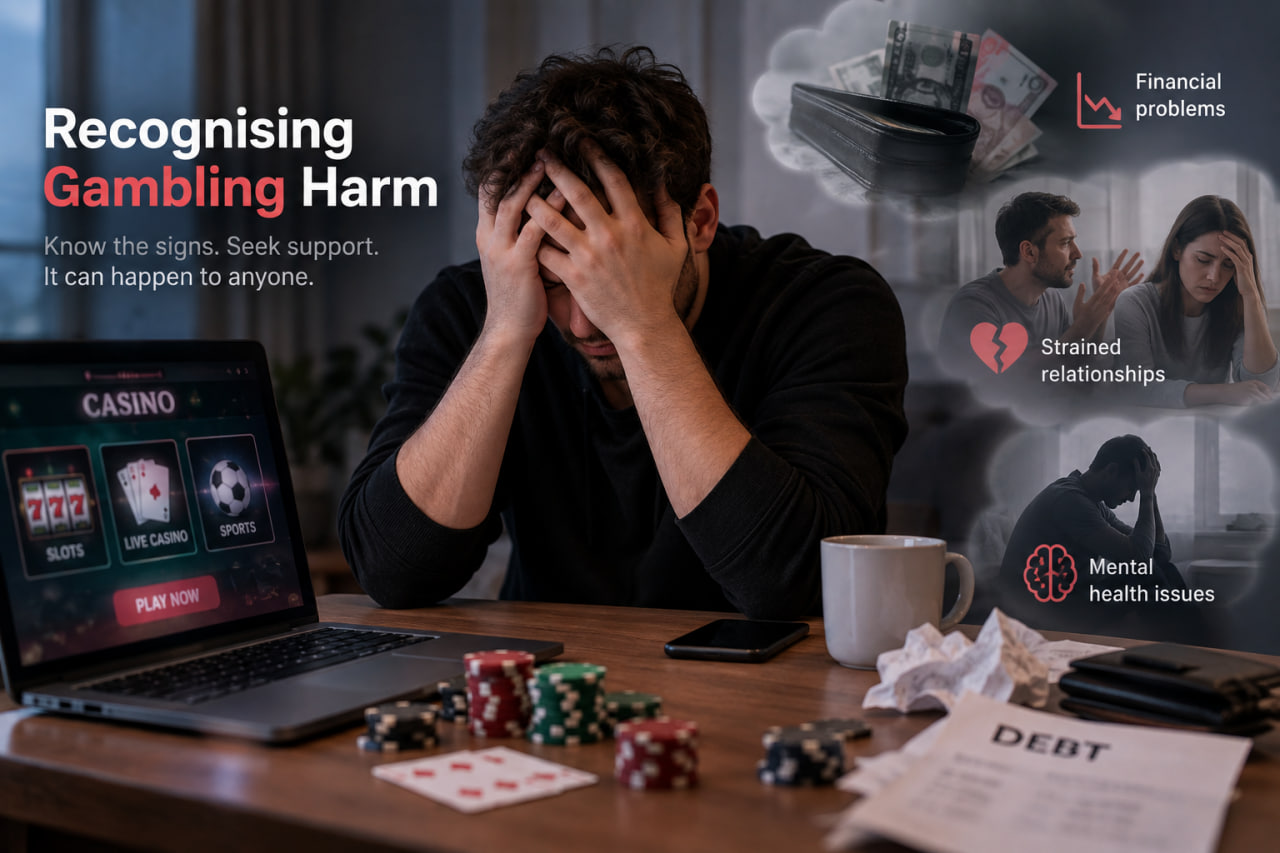
Gambling harm can affect the person who gambles as well as partners, children, relatives and household finances. It may begin quietly: more time spent checking casino or betting apps, larger deposits, irritability after losses, hiding transactions, or using gambling to cope with stress. The earlier these patterns are recognised, the easier it can be to set limits, protect essential money and ask for support.
One of the clearest signs is difficulty stopping
A key warning sign of problem gambling is repeatedly spending more time or money than intended. Someone may decide to stop after one more bet, deposit again after reaching a limit, or return to gambling shortly after promising themselves or their family that they would take a break.
Loss of control can also appear as constant thoughts about gambling, planning the next session, checking odds or casino offers throughout the day, and feeling restless when unable to gamble.
Trying to win back losses can increase gambling harm
Chasing losses means continuing to gamble because of a belief that the next bet will recover money already lost. This pattern can quickly increase financial harm because decisions become focused on recovering losses rather than on the original entertainment budget.
Common examples include increasing bet sizes after a losing streak, making repeated deposits in one session, borrowing money to continue, or returning the next day with the specific goal of “getting even.”
Gambling financial harm often appears before a crisis
Financial signs can include missing bill payments, using savings unexpectedly, taking cash advances, borrowing from friends or relatives, selling possessions, or moving money between accounts to hide gambling expenditure.
Another warning sign is when money intended for rent, food, healthcare, childcare or debt repayments is redirected toward gambling. At that point, gambling is no longer simply leisure spending because it is competing with essential needs.
Signs of gambling harm families may notice
These signs do not automatically prove a gambling disorder, but several appearing together can indicate that gambling is causing meaningful harm.
More secrecy
Hiding betting activity, deleting banking notifications, minimising losses or becoming defensive when gambling is discussed.
Mood changes
Irritability, anxiety, guilt, low mood or sudden excitement linked closely to wins, losses or access to gambling.
Routine disruption
Staying up late to gamble, cancelling plans, missing responsibilities or spending less time on work, family and previously enjoyable activities.
Gambling harm can spread through the household
Gambling and family stress often become connected through money, trust and time. Partners may feel uncertain about shared finances, while repeated secrecy can damage trust even when the financial losses are not extremely large.
Children can also be indirectly affected if household tension rises, routines become less stable, or essential spending is reduced. For this reason, recognising gambling harm is not only about protecting the person who gambles; it can also protect family wellbeing.
Stress, guilt and anxiety can reinforce the cycle
Some people gamble to escape stress, boredom or difficult emotions. After losses, however, gambling may create additional anxiety or guilt. That can produce a cycle in which a person returns to gambling for temporary relief even though gambling itself is causing more distress.
Warning signs may include difficulty concentrating, poor sleep, irritability, avoiding conversations about money and feeling preoccupied with previous wins or losses.
Practical boundaries can reduce further harm
When gambling is beginning to feel difficult to control, practical restrictions can be more effective than relying on willpower alone.
- Set fixed deposit, loss and time limits before gambling starts.
- Do not use credit, loans or essential household money for gambling.
- Avoid chasing losses or increasing stakes to recover previous losses.
- Use gambling blocks, account limits or self-exclusion tools where available.
- Remove saved payment methods if easy deposits are encouraging impulsive play.
- Keep a written record of gambling spend to make the real cost easier to see.
Gambling support is useful before the situation becomes severe
Professional gambling support can be appropriate when gambling is creating debt, repeated arguments, secrecy, anxiety, difficulty stopping or problems meeting everyday responsibilities. A counsellor, healthcare professional or specialist gambling support service can help assess the situation and discuss practical ways to reduce access to gambling and protect finances.
If gambling-related distress is linked with thoughts of self-harm or an immediate safety concern, urgent support from local emergency or crisis services is important.
Ask what gambling is costing beyond money
One useful way to recognise gambling harm is to look beyond deposits and withdrawals. Ask whether gambling is costing sleep, attention, trust, time with family, concentration at work or emotional stability. Those non-financial costs can reveal a problem earlier than a bank balance alone.
Recognising gambling harm early can protect more than money
Warning signs such as chasing losses, secrecy, borrowing, emotional distress and disrupted family routines deserve attention. Gambling should remain controlled entertainment. When it starts interfering with finances, relationships or wellbeing, reducing access and seeking support can be an important next step.